


Content creation is the lifeblood of any successful online presence, but keeping the flow consistent and high-quality can feel like an uphill battle. Traditional methods often involve manual research, writing, and optimization, which can be time-consuming and resource-intensive. This creates bottlenecks that limit your reach and impact.
Fortunately, there’s a smarter way: SEO content automation. It’s not about replacing human creativity, but about empowering it with technology. This guide explores how to leverage automation to repurpose your existing content, maximizing its value and expanding your audience.
Is Your Content Pipeline Stuck in First Gear? Time to Automate
Diagnosing the Bottlenecks: Where Content Creation Typically Fails
Many companies struggle to maintain a consistent content calendar due to several common bottlenecks. One major issue is inefficient keyword research. Manually identifying relevant keywords and analyzing competitor content can take hours or even days, slowing down the entire process. Another challenge is the writing itself. Creating original, engaging, and SEO-optimized articles requires skilled writers and editors, who may be in short supply or have limited bandwidth. Furthermore, the optimization phase, including tasks such as adding internal links and meta descriptions, is often overlooked or rushed, diminishing the content’s potential impact. Using an AI-powered platform to handle website keyword research is often the first step towards a streamlined workflow.
The Hidden Costs of Manual Content Production: Time, Resources, and Missed Opportunities
Manual content production incurs significant hidden costs beyond just salaries. The time spent on research, writing, and editing could be used for other strategic activities, such as marketing campaign development or product innovation. There’s also the cost of missed opportunities. If you’re unable to publish content consistently, you’re losing out on potential traffic, leads, and sales. Moreover, manual processes are prone to errors and inconsistencies, which can negatively impact your brand’s credibility and search engine rankings. Think of the cost of manually updating out-of-date blog posts and statistics. Automating content processes frees up time and resources, allowing you to focus on high-impact tasks and capitalize on emerging trends. Tools can even assist with AI-powered content pruning as well as content pruning to keep website content fresh.
What is SEO Content Automation (and What It Isn’t)
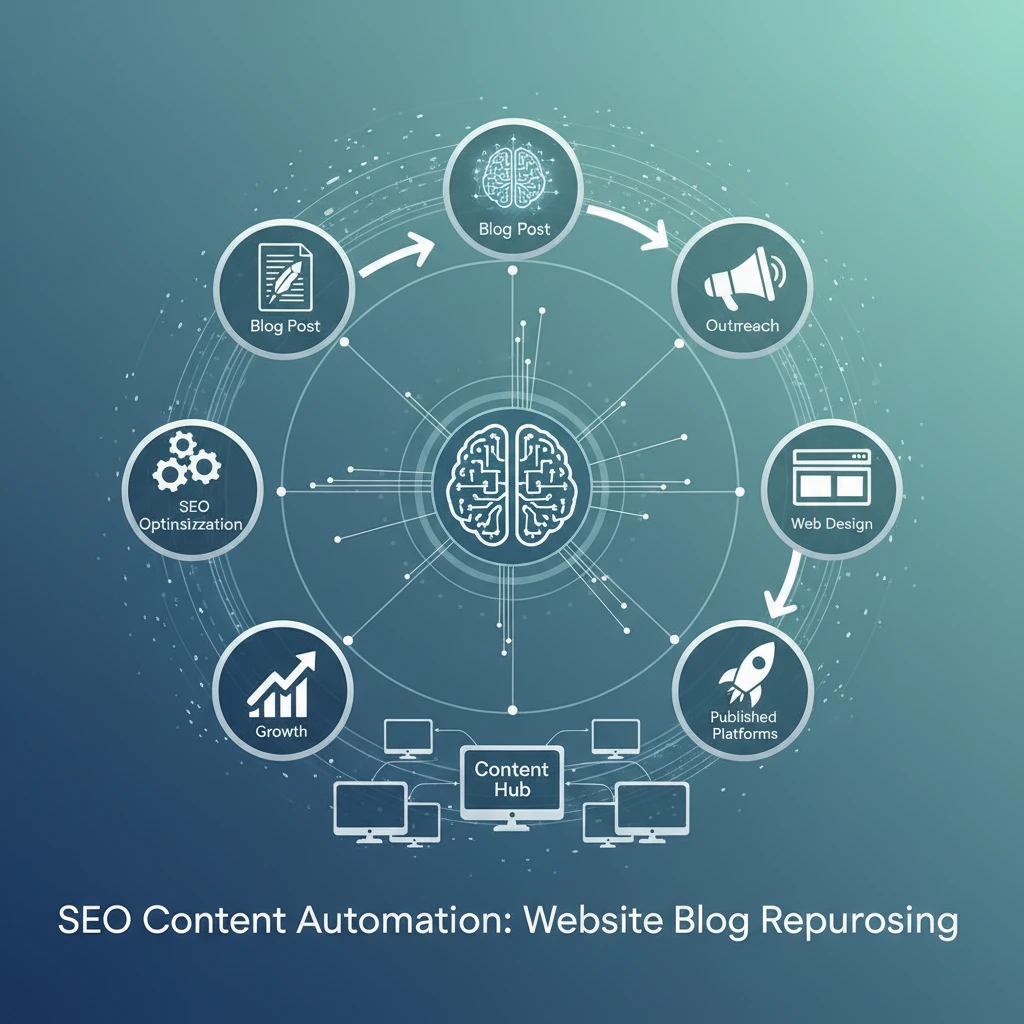
Defining True Automation: Beyond Just Scheduling Posts
SEO content automation goes far beyond simply scheduling social media posts or blog entries. True automation involves using technology to streamline and enhance every stage of the content lifecycle, from keyword research to distribution. This can include using AI-powered tools to generate article outlines, write first drafts, optimize content for search engines, create compelling visuals, and even distribute content across multiple platforms. It’s about creating a system that consistently produces high-quality, SEO-friendly content with minimal manual intervention. The goal is to free up human creativity and expertise, allowing you to focus on strategy and innovation, while the technology handles the repetitive tasks. For example, automation can handle website indexing for increased visibility, as described in our guide to AI-powered website indexing.
Dispelling the Myths: AI Won’t Replace Creativity, but Enhance It
One common misconception is that SEO content automation will replace human creativity. In reality, AI and automation are tools that enhance creativity, not eliminate it. AI can handle the time-consuming tasks of research and data analysis, freeing up writers and editors to focus on crafting compelling narratives and adding unique insights. Think of AI as a research assistant that provides you with the information you need to create better content, faster. The human element is still essential for ensuring that the content is engaging, accurate, and aligned with your brand’s voice and values. True success lies in finding the right balance between automation and human expertise. As noted by Over Horizon Media, building a data-first marketing culture is essential for startup growth and allows for better AI integration.
The Core Components: Research, Writing, Optimization, and Distribution
SEO content automation encompasses four key components: research, writing, optimization, and distribution. Automated research involves using AI-powered tools to identify relevant keywords, analyze competitor content, and uncover trending topics. Automated writing can assist with generating article outlines, writing first drafts, and even creating different versions of the same content for various platforms. Automated optimization ensures that your content is SEO-friendly, with proper keyword usage, meta descriptions, and internal links. Finally, automated distribution involves scheduling posts, promoting content on social media, and even sending personalized email newsletters. By automating these four core components, you can create a content machine that consistently generates high-quality, SEO-optimized content with minimal effort.
Repurposing for Reach: Maximizing the Value of Existing Blog Content
The Power of the Content Multiplier Effect
Repurposing existing blog content unlocks the “content multiplier effect,” where a single piece of content generates multiple outputs, extending its reach and impact. Instead of constantly creating new content from scratch, you can leverage your existing assets to reach new audiences and reinforce your message. This approach saves time and resources while maximizing the ROI of your content investments. By transforming a blog post into an infographic, a video, or a social media series, you can cater to different learning styles and preferences, increasing engagement and driving more traffic to your website. A successful content localization strategy is also vital for reaching a wider global audience. For tips, read our guide to AI-powered content localization.
Identify Evergreen Content: The Foundation for Repurposing Efforts
The first step in repurposing is identifying your “evergreen” content – articles that remain relevant and valuable over time. These are the cornerstone of any successful repurposing strategy. Focus on content that addresses fundamental questions, provides timeless advice, or offers in-depth analysis of core topics in your industry. Avoid repurposing content that is time-sensitive or heavily reliant on current events, as it will quickly become outdated. To identify evergreen content, analyze your website analytics to see which articles consistently generate traffic and engagement. Look for content that has stood the test of time and continues to resonate with your audience. These articles are prime candidates for repurposing into new formats. Examples might include a post about “essential web design principles” or “the fundamentals of SEO.”
From Blog Post to Powerhouse: Content Repurposing Strategies in Action
Transforming List-Based Articles into Engaging Infographics
List-based articles are perfect for transformation into engaging infographics. Visually representing the information in a listicle makes it more digestible and shareable. To repurpose a listicle into an infographic, extract the key points from each item on the list and create corresponding visuals, such as icons, charts, and illustrations. Use a consistent color scheme and font to maintain a professional look and feel. Tools like Canva or Adobe Illustrator can help you create visually appealing infographics without requiring advanced design skills. Promote your infographic on social media, embed it in your blog post, and submit it to infographic directories to maximize its reach. For example, an article titled “10 SEO Mistakes to Avoid” could be turned into an infographic with 10 visually distinct sections, each highlighting a common SEO mistake with a corresponding icon and brief explanation. You can also explore platforms like Venngage for infographic creation assistance.
Turning Case Studies into Compelling Video Testimonials
Case studies, which are often text-heavy and detailed, can be transformed into engaging video testimonials that showcase the real-world impact of your products or services. Video testimonials provide a more personal and authentic perspective, building trust and credibility with potential customers. To create a video testimonial from a case study, interview the customer featured in the case study and ask them to share their experience in their own words. Focus on the key benefits and results they achieved by using your product or service. Keep the video concise and focused, highlighting the most compelling aspects of the case study. For example, a written case study detailing how a business increased its website traffic by 50% using your SEO tools could be turned into a video where the business owner shares their story, showcasing before-and-after results and expressing their satisfaction with your product. Use these video testimonials as part of your strategy for converting visitors.
Converting Expert Interviews into Snippet-Based Social Media Content
Expert interviews are a goldmine of valuable insights and can be easily repurposed into snippet-based social media content. Extract key quotes and soundbites from the interview and create engaging social media posts that highlight the expert’s knowledge and perspective. Use eye-catching visuals and concise captions to capture the attention of your audience. You can also create short video clips featuring the expert answering specific questions. Share these snippets across various social media platforms, such as Twitter, LinkedIn, and Instagram, to reach a wider audience and drive traffic to your website. For example, an interview with a web design expert could be broken down into multiple social media posts featuring snippets about UX best practices, website accessibility tips, and emerging web design trends. Make sure to credit the expert and include a link to the full interview in your social media posts. Consider using tools like Buffer to schedule and manage your social media posts effectively.
SEO Benefits of Automated Repurposing: Amplifying Your Organic Footprint
Automated content repurposing offers significant SEO advantages by expanding your reach and strengthening your website’s authority. By transforming existing content into multiple formats and distributing it across various platforms, you can attract a wider audience and improve your search engine rankings. Effective repurposing leverages the “create once, publish many” principle, maximizing the ROI of each piece of content you produce. This approach also allows you to cater to different learning styles and consumption preferences, engaging users who might otherwise miss your original content. This is especially valuable for founders and marketers aiming for organic growth and consistent publishing.
Creating Topic Clusters: Linking Related Content for Improved Rankings
One of the most effective SEO tactics facilitated by automated content repurposing is the creation of topic clusters. This involves linking related content pieces together on your website, creating a network of interconnected information. For instance, a blog post on AI content optimization can be repurposed into an infographic, a short video, and a series of social media posts, all linking back to the original article. By strategically linking these repurposed assets, you signal to search engines that your website is an authority on the subject. It also improves site navigation and user experience, leading to longer session durations and lower bounce rates, both of which are positive ranking factors. AI can help identify relevant connections automatically, streamlining the process of building robust topic clusters. You can also use this strategy to support content pruning, improving overall site performance.
Generating Fresh Content Signals: Keeping Your Site Active and Relevant
Search engines favor websites that consistently publish fresh, relevant content. Automated content repurposing allows you to achieve this without constantly creating entirely new pieces. Even minor updates and republishing of existing content can signal to search engines that your site is active. Repurposing breathes new life into older, high-performing content, making it relevant again. For example, turning a popular blog post from last year into a slide deck with updated statistics and insights can reignite interest and boost its visibility. This proactive approach to content maintenance helps your site stay competitive in search results. Furthermore, fresh content can contribute positively to website indexing automation efforts.
Targeting Long-Tail Keywords: Capturing Niche Audiences with Specific Queries
Repurposing content provides an opportunity to target long-tail keywords that you might have missed in your initial content creation. By creating variations of your core content, such as FAQs, checklists, or how-to guides, you can address specific user queries and capture niche audiences. For example, if your original article covers “SEO Content Automation,” you could create a repurposed piece targeting “SEO content automation for e-commerce” or “best AI tools for SEO content automation.” This targeted approach increases your chances of ranking for these specific keywords and attracting qualified leads. Leveraging AI for content repurposing significantly enhances your ability to identify and target a greater range of long-tail keywords, ultimately improving your organic reach and driving more relevant traffic to your website.
Content Automation Workflow: A Step-by-Step Guide for Founders and Marketers
Implementing a content automation workflow is crucial for maximizing the benefits of content repurposing. It involves a structured approach to identifying content opportunities, creating repurposed assets, and distributing them effectively. By streamlining the process, founders and marketers can ensure consistent content creation and distribution without overwhelming their teams. This requires a clear understanding of your audience, your existing content, and the available automation tools. The goal is to create a sustainable and scalable content engine that drives organic growth and engagement.
Step 1: Audit Your Existing Content Library and Tag Key Themes
The first step is to conduct a thorough audit of your existing content library. Identify your top-performing articles, blog posts, videos, and social media updates. Analyze their performance metrics, such as page views, social shares, and conversion rates. Then, tag each piece of content with relevant keywords and themes. This will help you identify content that is ripe for repurposing. Focus on content that is evergreen and continues to attract traffic. Consider using a spreadsheet or content management system (CMS) to organize your content and track its performance. This audit will provide a clear picture of your content assets and their potential.
Step 2: Brainstorm Repurposing Ideas Based on Content Performance and Audience Interests
Once you have audited your content, brainstorm repurposing ideas based on its performance and your audience’s interests. Consider different formats, such as turning a blog post into an infographic, a video, or a podcast episode. Think about how you can adapt the content to different platforms, such as social media, email marketing, or online courses. Pay attention to the questions and feedback you receive from your audience, as this can provide valuable insights into their needs and interests. Use audience surveys and social listening tools to identify trending topics and areas where you can provide valuable information. Prioritize repurposing ideas that align with your overall marketing goals and target audience preferences.
Step 3: Implement an Automation Platform to Streamline Research, Writing, and Publishing
To efficiently execute your repurposing strategy, implement an automation platform like SEO45 AI to streamline the research, writing, and publishing processes. These platforms can help you automate various tasks, such as keyword research, content creation, optimization, and distribution. Choose a platform that aligns with your budget, technical skills, and content needs. Ensure the platform offers features for AI-driven content generation, SEO optimization, and social media integration. Automation tools enable consistent and efficient content generation. For example, you could leverage automation for AI-powered content, aiming to convert website visitors.
Measuring Success: Key Metrics for Evaluating Your Content Automation Strategy
Measuring the success of your content automation strategy is crucial for optimizing your efforts and ensuring a positive return on investment. By tracking key metrics, you can identify what’s working and what’s not, and make data-driven decisions to improve your content performance. Focus on metrics that align with your overall business goals, such as organic traffic growth, lead generation, and conversion rates. Regularly monitor these metrics and adjust your strategy as needed.
Tracking Organic Traffic Growth and Keyword Rankings
One of the primary goals of content automation is to improve your website’s organic visibility. Therefore, tracking organic traffic growth and keyword rankings is essential. Monitor your website’s traffic from search engines, and identify which keywords are driving the most traffic. Use tools like Google Analytics and Google Search Console to track these metrics. Pay attention to keyword ranking fluctuations and identify opportunities to optimize your content for better rankings. Remember to track both branded and non-branded keywords to get a complete picture of your SEO performance. You can further explore how to track your keyword rankings through tools like Ahrefs.
Monitoring Engagement Metrics: Bounce Rate, Time on Page, and Social Shares
Engagement metrics provide valuable insights into how users are interacting with your content. Monitor metrics such as bounce rate, time on page, and social shares to gauge the effectiveness of your content. A low bounce rate and high time on page indicate that users are finding your content engaging and relevant. Social shares indicate that users are finding your content valuable and are willing to share it with their networks. Use these metrics to identify content that resonates with your audience and replicate its success. Analyze the content with high bounce rates and identify areas for improvement, such as improving readability, adding visuals, or addressing user intent more effectively. For instance, AI content can optimize a website’s Core Web Vitals, potentially leading to improved engagement.
Assessing Lead Generation and Conversion Rates
Ultimately, the success of your content automation strategy should be measured by its impact on lead generation and conversion rates. Track how many leads are generated through your content, and monitor the conversion rates of those leads into customers. Use tools like CRM systems and marketing automation platforms to track these metrics. Analyze which content is driving the most leads and conversions, and identify opportunities to optimize your content for better results. Consider A/B testing different calls to action and landing pages to improve your conversion rates. Regularly monitor your lead generation funnel and identify areas where you can improve the user experience and streamline the conversion process. A strong understanding of user journeys is paramount for this.
Common Pitfalls to Avoid When Automating SEO Content
While content automation offers numerous benefits, it’s essential to be aware of potential pitfalls and take steps to avoid them. Over-reliance on automation can lead to generic, low-quality content that fails to engage users or rank well in search results. It’s crucial to maintain a balance between automation and human oversight, ensuring that your content remains valuable, informative, and aligned with your brand’s voice and values.
Over-Optimization: Sticking to Natural Language and User Intent
One common pitfall is over-optimization, which involves stuffing your content with keywords and using unnatural language in an attempt to manipulate search engine rankings. This can result in a poor user experience and penalization by search engines. Instead, focus on writing natural, engaging content that addresses user intent. Use keywords strategically, but prioritize readability and user experience. Remember that search engines are becoming increasingly sophisticated at understanding natural language, and they reward content that is genuinely helpful and informative. Conduct thorough keyword research to understand the terms your target audience is using, but avoid forcing those keywords into your content if it doesn’t feel natural.
Neglecting Content Quality: AI as a Tool, Not a Replacement for Expertise
Another mistake is neglecting content quality in favor of automation. While AI can be a powerful tool for generating content, it should not be used as a replacement for human expertise and critical thinking. Always review and edit AI-generated content to ensure it is accurate, well-written, and aligned with your brand’s voice and values. Add your own insights, experiences, and perspectives to make your content unique and valuable. Remember that content quality is paramount for attracting and engaging your target audience. Use AI to enhance your content creation process, but never compromise on quality.
Ignoring Content Diversity: Rotating Topics and Avoiding Repetitive Themes
Repetitive content can bore your audience and signal to search engines that your website lacks depth and authority. To avoid this pitfall, rotate topics and avoid repetitive themes. Explore different angles and perspectives on your core topics, and diversify your content formats. Use a content calendar to plan your content and ensure a balanced mix of topics and formats. For SEO45 AI customers, this means rotating topics and competitors to avoid repetition, which could be achieved by using the platform’s built-in content scheduling and topic management features. By maintaining content diversity, you can keep your audience engaged and demonstrate your expertise across a wide range of subjects. For example, do not write comparison-based articles focused on the same competitor on consecutive days; instead, space them out using a rotating framework.
Future-Proofing Your Strategy: Adapting to Evolving Search and AI Landscape
Staying Updated on Algorithm Changes and Best Practices
The SEO landscape is in perpetual motion, driven by frequent algorithm updates from search engines and the relentless advancement of AI technologies. Stagnation is a death knell for any SEO strategy. Continuous learning and adaptation are critical. Businesses must actively monitor industry publications, attend webinars, and participate in relevant communities to stay informed about the latest changes and best practices. Ignoring these changes can lead to a decline in rankings and visibility. Consider using an RSS feed aggregator or setting up Google Alerts for relevant keywords like “Google Algorithm Update,” “SEO Best Practices,” and “AI Content Marketing.” You can learn more about Google’s algorithm updates directly from Google Search Central.
The specific impact of algorithm updates on automated content requires diligent analysis. For example, an update that penalizes thin or low-quality content would disproportionately affect websites relying on automation to produce a high volume of superficial articles. Proactive analysis and adjustments are essential to mitigate these risks. Review your content automation workflows to ensure they align with current guidelines, with a focus on depth, accuracy, and user value. Always remember that AI content should serve as a supplement, not a replacement, for human expertise and insight.
Experimenting with Emerging AI Technologies and Content Formats
While established AI tools offer significant benefits, exploring emerging technologies and content formats can provide a competitive edge. This involves testing new AI models, experimenting with different prompts and parameters, and exploring novel content formats like interactive articles, personalized video summaries, or AI-generated infographics. Embrace experimentation, but with a clear set of goals and metrics. Establish key performance indicators (KPIs) to measure the effectiveness of new technologies and formats, such as engagement rate, time on page, conversion rate, and organic traffic.
One potentially valuable area for experimentation is fine-tuning AI models on your own data. This allows you to create more specialized and relevant content that caters to your specific audience and niche. For example, an e-commerce business could train an AI model on its product catalog and customer reviews to generate highly targeted product descriptions and personalized recommendations. You could also consider exploring how AI can enhance existing formats; this might involve using AI to create subtitles for videos, generate alt text for images, or even create initial drafts for blog posts before human editing and refinement. Prioritize experiments that align with your overall content strategy and business goals. Remember to document your experiments and share your findings with your team to foster a culture of continuous learning and innovation. Consider exploring content systems that allow for AI-Powered Lead Magnet Automation, which is a great way to convert your readers.
Prioritizing User Experience and Content Value Above All Else
No matter how sophisticated your automation tools are, the ultimate goal of your content strategy should be to provide a positive user experience and deliver genuine value to your audience. This means creating content that is informative, engaging, and easy to consume, while also addressing the specific needs and interests of your target audience. User experience (UX) is paramount; search engines increasingly prioritize websites that offer a seamless and enjoyable browsing experience. Focus on factors such as site speed, mobile-friendliness, and clear navigation.
Evaluate all automated content through a user-centric lens. Ask yourself: is this content truly helpful and valuable? Is it well-written and easy to understand? Does it address the user’s intent? Does it provide unique insights or perspectives? If the answer to any of these questions is no, then the content should be revised or discarded. It’s also critical to avoid keyword stuffing or other manipulative tactics that can detract from the user experience. Focus on natural language and provide information in a clear and concise manner. You can even implement AI-Powered Content: Website User Journey Optimization for higher conversions and better user experiences.
Real-World Examples: How Businesses are Using SEO Content Automation Today
Many businesses are successfully using SEO content automation to scale their content creation efforts. However, these examples highlight the importance of responsible and strategic implementation. Automated content can also improve Website Core Web Vitals Automation, ultimately improving user experience.
Example: A SaaS company used AI to generate initial drafts of blog posts, which were then reviewed and edited by subject matter experts. This allowed them to increase their publishing frequency by 30% while maintaining a high level of quality. They focused on long-tail keywords related to their software’s features and benefits, and they tracked the performance of each blog post to identify areas for improvement. The company also used AI to create social media posts and email newsletters to promote their blog content, resulting in a 20% increase in website traffic.
Example: An e-commerce retailer automated the creation of product descriptions using AI, but they carefully curated the AI’s output to ensure it accurately reflected the features and benefits of each product. They used a combination of AI and human editors to create compelling and informative product descriptions that resonated with their target audience. The company also used AI to generate customer reviews and testimonials, which helped to build trust and credibility with potential buyers. They saw a 15% increase in conversion rates after implementing this strategy.
Example: A marketing agency utilizes automation to create location pages for local businesses. The agency uses AI to generate unique content for each page, highlighting local landmarks, points of interest, and community events. Human editors then review and optimize the content to ensure accuracy and relevance. This allows the agency to quickly create a large number of high-quality location pages that rank well in local search results. They report a 40% increase in leads for their local business clients.
Scaling Content Creation Responsibly: a Checklist for Automation
Content Calendar and Topic Rotation: Checklist
- Define your target audience and their needs: Understand their pain points, interests, and search behavior.
- Conduct thorough keyword research: Identify relevant keywords with sufficient search volume and low competition. Leverage tools for AI Content: Website Keyword Research Automation.
- Create a content calendar with diverse topics: Plan out your content schedule in advance, ensuring a mix of informational, transactional, and engaging content.
- Implement a topic rotation system: Avoid covering the same topic or competitor too frequently to prevent content fatigue and maintain diversity.
- Regularly review and update your content calendar: Adjust your plan based on performance data, industry trends, and audience feedback.
Accuracy and Fact-Checking: Checklist
- Verify all information from AI-generated content: Do not blindly trust the output of AI tools.
- Cross-reference information with reliable sources: Use reputable websites, academic journals, and industry experts.
- Cite your sources properly: Give credit to the original creators of information.
- Implement a fact-checking process: Assign a dedicated person or team to review all content for accuracy.
- Establish clear guidelines for handling errors: Have a process in place for correcting mistakes quickly and transparently.
Quality Review and Approval: Checklist
- Establish clear quality standards: Define what constitutes high-quality content for your brand.
- Review content for grammar, spelling, and style: Ensure the content is error-free and consistent with your brand’s voice.
- Assess content for clarity and readability: Make sure the content is easy to understand for your target audience. Consider using a tool like the Hemingway Editor to improve readability.
- Check for originality and plagiarism: Use plagiarism detection tools to ensure the content is unique.
- Obtain final approval from a designated authority: Ensure that someone with the appropriate expertise and authority signs off on all content before it is published.
By carefully considering the future of SEO and implementing these checklists, businesses can leverage AI content automation to scale their content creation efforts responsibly and effectively. Remember to prioritize user experience, accuracy, and quality above all else.