
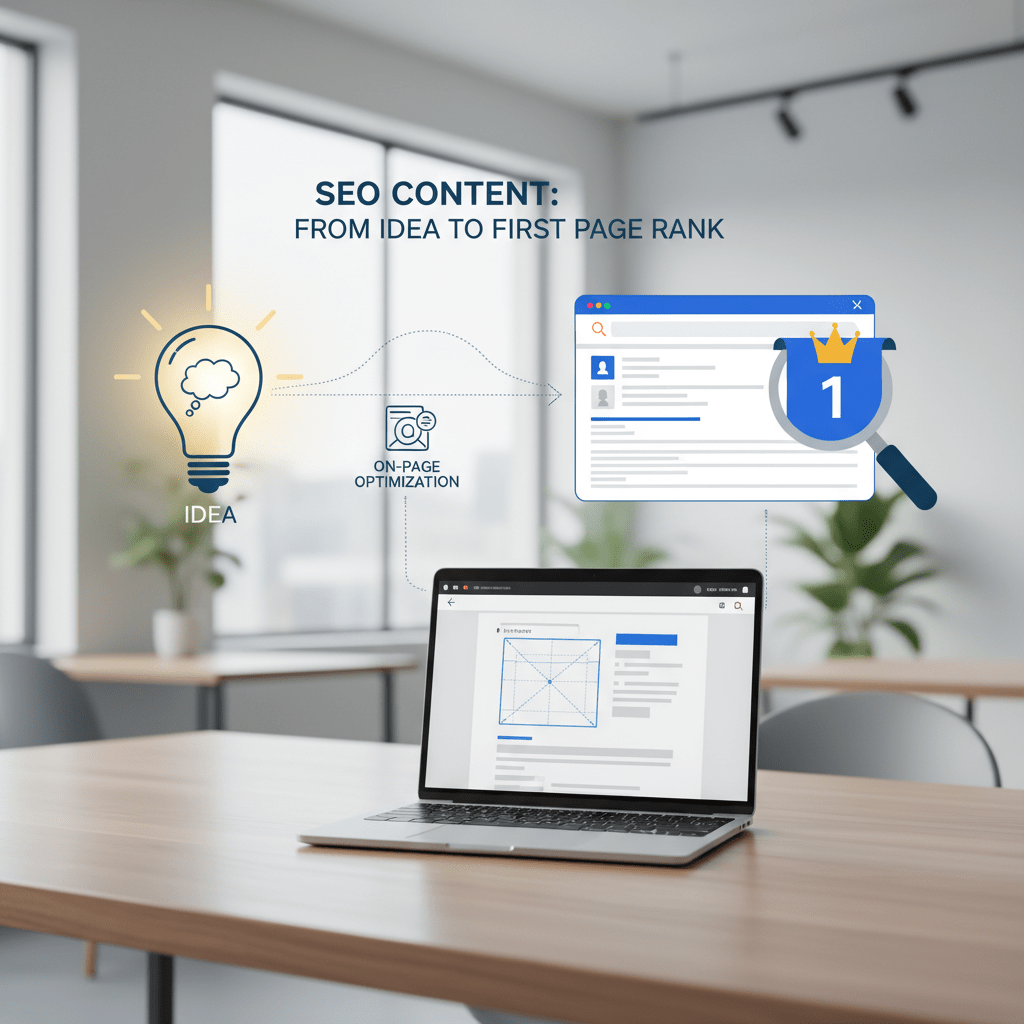
Every digital marketer shares a common goal: to see their content ranking proudly on the first page of Google. But achieving this coveted spot is rarely a matter of luck. It’s the result of a deliberate, strategic process known as SEO content creation. This isn’t just about scattering a few keywords into a blog post; it’s a comprehensive lifecycle that transforms a simple idea into a powerful, traffic-driving asset.
Many businesses invest time and resources into creating content, only to see it languish in the depths of search engine results pages (SERPs). The missing link is often a misunderstanding of how to align content with both user intent and search engine algorithms. This guide will demystify the process, providing a step-by-step framework to take your content from a nascent idea all the way to a first-page ranking.
The Foundation: Ideation and Strategic Keyword Research
Before you write a single word, you must lay a solid foundation. The most beautifully written article will fail if it targets the wrong topic or misunderstands what the audience is actually searching for. This initial phase is about discovery and strategy.
Beyond the Obvious: Finding Content Ideas
Great content starts with an idea that resonates with your target audience. Your goal is to find topics that address their pain points, answer their questions, and align with your business expertise. Here’s how to find them:
- Competitor Analysis: Use SEO tools to see what keywords your competitors are ranking for. Look for their top-performing pages. This isn’t about copying them, but about identifying content gaps you can fill or topics you can cover more comprehensively.
- Audience Listening: Where does your audience hang out online? Check forums like Reddit, Quora, and industry-specific groups. The questions people are asking are direct content ideas.
- SERP Features: Type a broad topic into Google and look at the “People Also Ask” (PAA) box and “Related searches.” These are direct insights into the user’s search journey and the specific questions they need answered.
- Brainstorming with Your Team: Your sales and customer service teams are on the front lines. They know the common questions and challenges your customers face better than anyone. Tap into that internal knowledge.
Mapping Keywords to Search Intent
Once you have topic ideas, you need to validate them with keyword research. A keyword is more than just a phrase; it’s a window into the user’s intent. Understanding this intent is crucial for creating content that satisfies the searcher. There are four primary types of search intent:
- Informational: The user wants to learn something (e.g., “how to write an SEO title tag”). These are perfect for blog posts, guides, and how-to articles.
- Navigational: The user wants to find a specific website or page (e.g., “Google Search Console login”). You generally don’t target these unless it’s your brand name.
- Commercial Investigation: The user is comparing products or services before making a purchase (e.g., “best SEO tools for small business”). This intent is ideal for comparison articles, reviews, and listicles.
- Transactional: The user is ready to buy (e.g., “buy Ahrefs subscription”). These keywords are best for product pages or service pages.
Your job is to match your content type to the dominant intent of your target keyword. A blog post will rarely rank for a transactional keyword, and a product page won’t rank for an informational one. Here’s a simple breakdown:
| Search Intent | Example Keyword | Ideal Content Format |
|---|---|---|
| Informational | “what is link building” | Blog Post, Guide, Definition |
| Commercial Investigation | “semrush vs ahrefs” | Comparison Article, Review |
| Transactional | “hire seo content writer” | Service Page, Contact Form |
Crafting High-Value, Optimized Content
With a validated idea and a target keyword mapped to user intent, it’s time to create the content. This is where you blend the art of writing with the science of on-page SEO.
Structuring for Readers and Robots
A giant wall of text is intimidating for readers and difficult for search engines to parse. A clear structure is essential for both user experience and SEO.
Use a Logical Hierarchy: Employ headings (H2s for main sections, H3s for sub-sections) to create a clear, scannable outline. This helps users find what they need quickly and signals the content’s structure to Google.
Write Short Paragraphs: Keep paragraphs to 2-4 sentences. This improves readability, especially on mobile devices where screen space is limited.
Utilize Lists: Use bulleted () and numbered () lists to break up text and present information in an easy-to-digest format. This also increases your chances of being featured in a Google Snippet.
Incorporate Visuals: Images, infographics, and videos can break up the text, illustrate complex points, and increase user engagement—a key ranking signal.
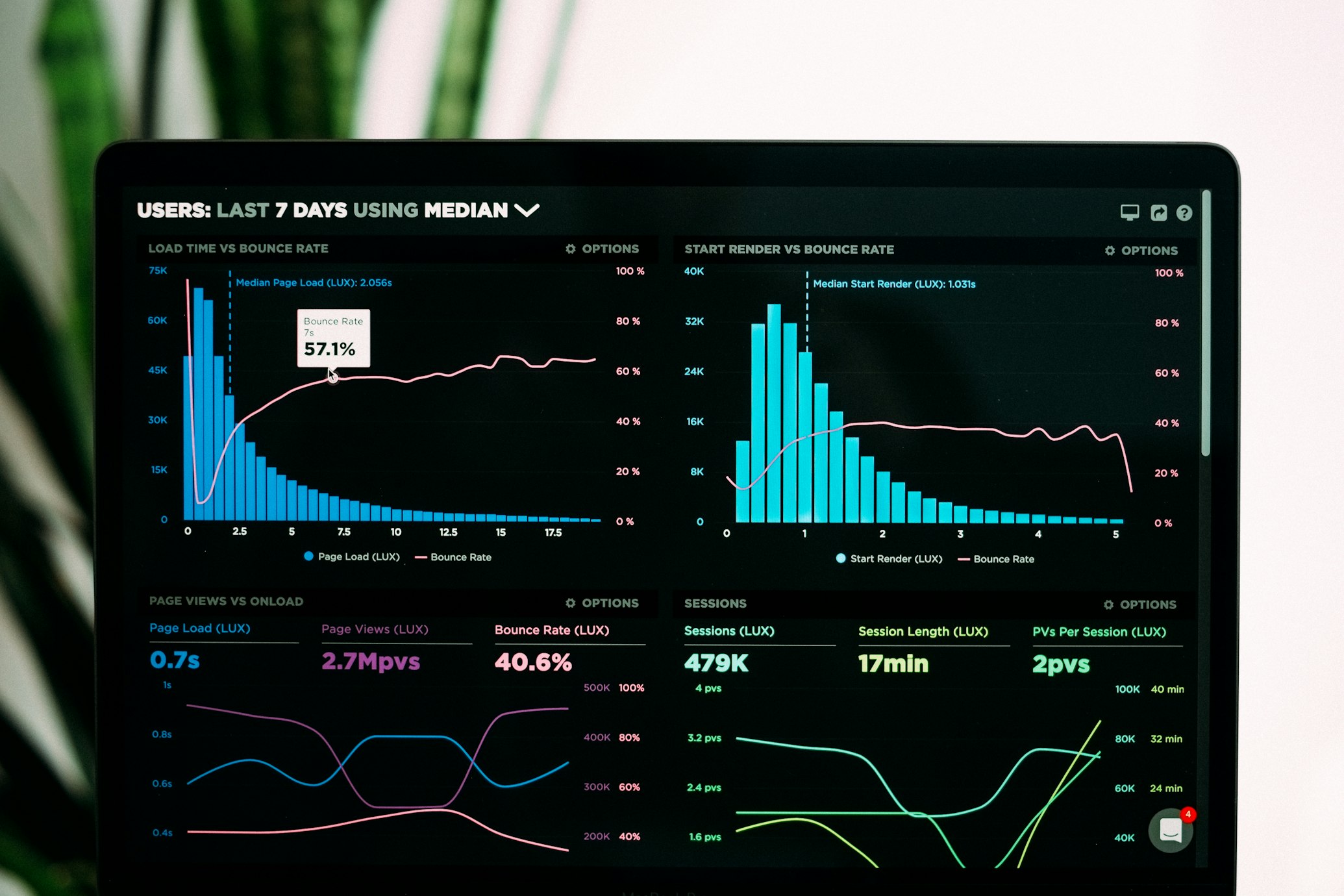
Analyzing performance metrics is a crucial step in the SEO content lifecycle.
On-Page SEO Essentials
On-page SEO involves optimizing individual web pages to rank higher and earn more relevant traffic. These are the non-negotiable elements to get right:
Title Tag: This is the blue link that appears in search results. It should be under 60 characters, include your primary keyword, and be compelling enough to entice a click.
Meta Description: While not a direct ranking factor, this short summary (under 160 characters) is your ad copy in the SERPs. A good meta description increases your click-through rate (CTR).
URL Slug: Keep your URL short, descriptive, and clean. Include your primary keyword (e.g., /seo-content-guide/ instead of /p?123).
Natural Keyword Usage: Your primary keyword should appear in your title, in the first 100 words of your content, and in at least one subheading. More importantly, use it and its variations naturally throughout the text. Avoid “keyword stuffing” at all costs.
Internal Linking: Link to other relevant pages on your website. This helps Google understand your site’s structure, distributes “link equity” (ranking power), and keeps users on your site longer.
Demonstrating E-E-A-T
Google wants to rank content that is helpful, reliable, and trustworthy. To do this, it evaluates content based on a framework known as E-E-A-T: Experience, Expertise, Authoritativeness, and Trustworthiness. According to Google’s own documentation, demonstrating these qualities is central to creating successful content. Here’s how:
Show, Don’t Just Tell: Include author bios that highlight credentials. Showcase case studies with real data.
Cite Authoritative Sources: Link out to reputable studies, reports, and established industry websites to back up your claims.
Provide Original Insights: Offer a unique perspective, original research, or first-hand experience that users can’t find elsewhere.
Maintain a Professional Site: Ensure your site is secure (HTTPS), has a clear contact page, and is free from technical errors.
The Launch: Publishing and Promotion
With a validated idea and a target keyword mapped to user intent, it’s time to create the content. This is where you blend the art of writing with the science of on-page SEO.
Structuring for Readers and Robots
A giant wall of text is intimidating for readers and difficult for search engines to parse. A clear structure is essential for both user experience and SEO.
- Use a Logical Hierarchy: Employ headings (H2s for main sections, H3s for sub-sections) to create a clear, scannable outline. This helps users find what they need quickly and signals the content’s structure to Google.
- Write Short Paragraphs: Keep paragraphs to 2-4 sentences. This improves readability, especially on mobile devices where screen space is limited.
- Utilize Lists: Use bulleted (
- ) and numbered (
- ) lists to break up text and present information in an easy-to-digest format. This also increases your chances of being featured in a Google Snippet.
- Incorporate Visuals: Images, infographics, and videos can break up the text, illustrate complex points, and increase user engagement—a key ranking signal.
On-Page SEO Essentials
On-page SEO involves optimizing individual web pages to rank higher and earn more relevant traffic. These are the non-negotiable elements to get right:
- Title Tag: This is the blue link that appears in search results. It should be under 60 characters, include your primary keyword, and be compelling enough to entice a click.
- Meta Description: While not a direct ranking factor, this short summary (under 160 characters) is your ad copy in the SERPs. A good meta description increases your click-through rate (CTR).
- URL Slug: Keep your URL short, descriptive, and clean. Include your primary keyword (e.g., /seo-content-guide/ instead of /p?123).
- Natural Keyword Usage: Your primary keyword should appear in your title, in the first 100 words of your content, and in at least one subheading. More importantly, use it and its variations naturally throughout the text. Avoid “keyword stuffing” at all costs.
- Internal Linking: Link to other relevant pages on your website. This helps Google understand your site’s structure, distributes “link equity” (ranking power), and keeps users on your site longer.
Demonstrating E-E-A-T
Google wants to rank content that is helpful, reliable, and trustworthy. To do this, it evaluates content based on a framework known as E-E-A-T: Experience, Expertise, Authoritativeness, and Trustworthiness. According to Google’s own documentation, demonstrating these qualities is central to creating successful content. Here’s how:
- Show, Don’t Just Tell: Include author bios that highlight credentials. Showcase case studies with real data.
- Cite Authoritative Sources: Link out to reputable studies, reports, and established industry websites to back up your claims.
- Provide Original Insights: Offer a unique perspective, original research, or first-hand experience that users can’t find elsewhere.
- Maintain a Professional Site: Ensure your site is secure (HTTPS), has a clear contact page, and is free from technical errors.
The Launch: Publishing and Promotion
Creating great content is only half the battle. Hitting “publish” is the starting line, not the finish line. A strategic promotion plan is what separates content that gets seen from content that gets buried.
Your Pre-Publish Checklist
Before your content goes live, run through a final quality check:
Proofread Meticulously: Typos and grammatical errors erode trust. Use a tool like Grammarly and have a colleague read it over.
Optimize Images: Ensure all images have descriptive alt text for accessibility and SEO. Compress them to ensure fast page load times.
Check Mobile-Friendliness: View the page on a mobile device. Is it easy to read and navigate? The majority of traffic is mobile, so this is critical.
Verify Links: Click every internal and external link to ensure they work and go to the correct destination.
Content Promotion Channels
Before your content goes live, run through a final quality check:
- Proofread Meticulously: Typos and grammatical errors erode trust. Use a tool like Grammarly and have a colleague read it over.
- Optimize Images: Ensure all images have descriptive alt text for accessibility and SEO. Compress them to ensure fast page load times.
- Check Mobile-Friendliness: View the page on a mobile device. Is it easy to read and navigate? The majority of traffic is mobile, so this is critical.
- Verify Links: Click every internal and external link to ensure they work and go to the correct destination.
Content Promotion Channels
Once published, it’s time to get the word out. Don’t assume people will find it on their own.
- Email Newsletter: Your email list is a captive audience that already trusts you. It should be the first place you share new content.
- Social Media: Share your article across all relevant social platforms. Tailor the message for each network—a professional tone on LinkedIn, a more visual approach on Instagram.
- Community Engagement: Share your content in relevant online communities (like Reddit or niche forums) where it genuinely adds value. Don’t just drop a link and run; engage in the conversation.
- Link Building Outreach: This is an advanced but powerful strategy. Identify websites that have linked to similar content and reach out to show them your (superior) resource. While time-consuming, a single authoritative backlink can significantly impact rankings.
The Feedback Loop: Measuring and Iterating
The work isn’t over after promotion. The final, ongoing stage of the SEO content lifecycle is to measure performance, analyze the data, and use those insights to improve. SEO content is not a “set it and forget it” activity.
Key Metrics to Track
Two free tools from Google are essential for this phase: Google Search Console and Google Analytics.
Google Search Console (GSC): This tool shows you how your content performs in Google Search. Track Impressions (how many times it was seen), Clicks, Click-Through Rate (CTR), and Average Position. You can also see the exact search queries that are bringing users to your page.
Google Analytics (GA): This tool shows you what users do after they land on your page. Key metrics include Pageviews, Average Engagement Time (how long they stay), and Conversions.
Interpreting the Data and Taking Action
Two free tools from Google are essential for this phase: Google Search Console and Google Analytics.
- Google Search Console (GSC): This tool shows you how your content performs in Google Search. Track Impressions (how many times it was seen), Clicks, Click-Through Rate (CTR), and Average Position. You can also see the exact search queries that are bringing users to your page.
- Google Analytics (GA): This tool shows you what users do after they land on your page. Key metrics include Pageviews, Average Engagement Time (how long they stay), and Conversions.
Interpreting the Data and Taking Action
Data is useless without action. Here are common scenarios and how to react:
- High Impressions, Low CTR: Your content is being seen, but not clicked. Your title tag and meta description are likely the problem. Test new, more compelling versions.
- High Bounce Rate / Low Engagement Time: Users are clicking but leaving quickly. This could mean your content doesn’t match the search intent, has a poor user experience (e.g., slow load time, pop-ups), or isn’t engaging enough. Re-evaluate the content’s quality and structure.
- Ranking on Page 2 or 3: You’re close! The content is relevant but needs an authority boost. Focus on building high-quality backlinks, improving internal linking to the page, or refreshing the content to be more comprehensive.
The Power of Content Refreshes
A post written a year ago may contain outdated statistics or miss new developments. Periodically reviewing and updating your top-performing content is a powerful SEO tactic. A “content refresh” can involve updating data, adding new sections, improving imagery, and fixing broken links. This signals to Google that your content is still relevant and valuable, often resulting in a significant rankings boost.
Conclusion: A Cycle of Continuous Improvement
Creating SEO content that ranks on the first page is a systematic process, not a stroke of creative genius. It begins with a deep understanding of your audience and strategic keyword research. It continues with the meticulous creation of high-value, well-structured content optimized for both users and search engines. Finally, it thrives through intelligent promotion and a commitment to analyzing performance data to guide future improvements.
By treating content creation as a continuous lifecycle—Ideate, Create, Promote, Analyze—you move beyond simply publishing articles and begin building a library of strategic assets that consistently drive organic traffic, build authority, and contribute directly to your business goals. Start applying this framework today and turn your content ideas into tangible ranking success.