

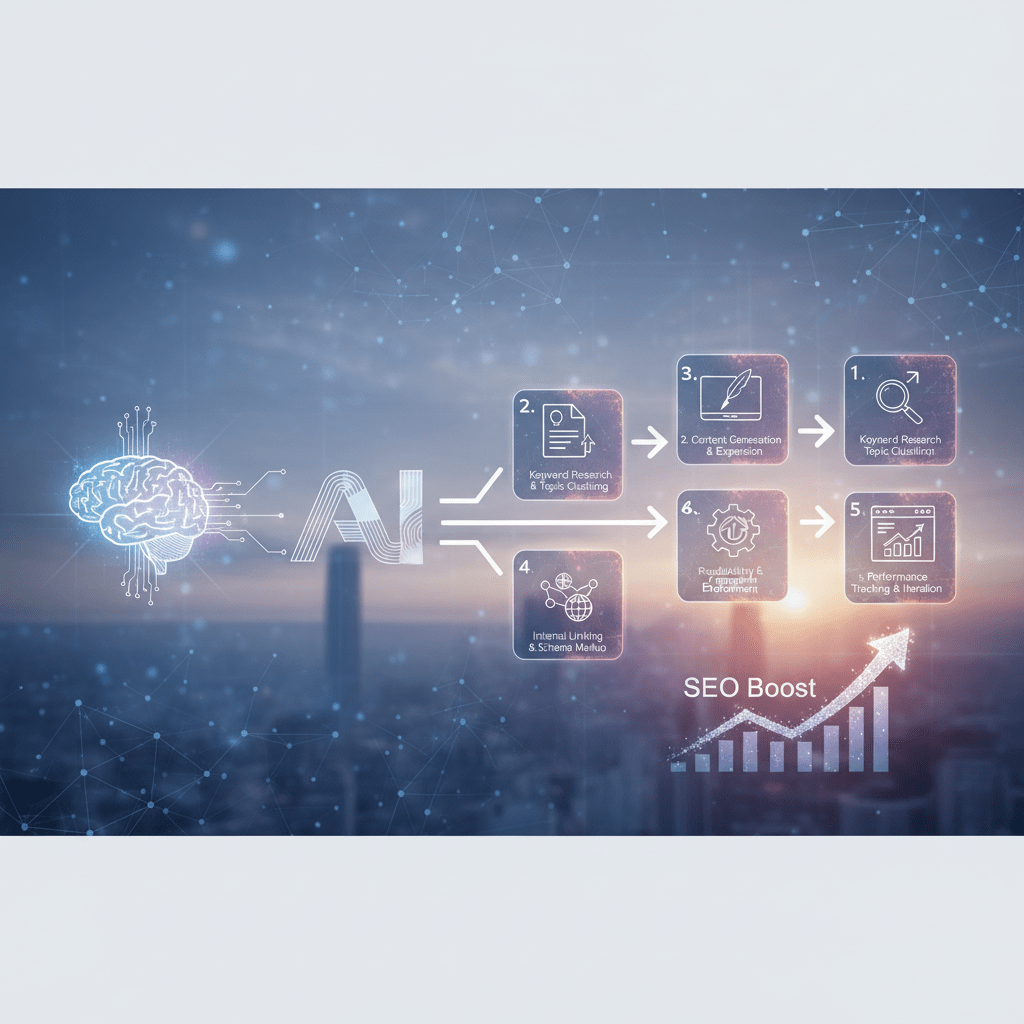
AI Content Optimization: Boost SEO in 5 Steps
In today’s digital landscape, creating content that not only resonates with your audience but also ranks high on search engine results pages (SERPs) is paramount. Traditional SEO tactics are no longer sufficient; you need a strategic approach that leverages the power of Artificial Intelligence (AI). This article outlines a five-step process to optimize your content using AI, ensuring it’s both engaging and SEO-friendly.
The integration of AI into content creation and SEO is no longer a future trend; it’s a present-day necessity. Businesses are increasingly relying on AI tools to streamline their content workflows, identify high-potential keywords, and improve overall SEO performance. The AI-Powered Advantage in SEO Content Optimization offers a way to improve your website’s ranking and drive organic traffic.
Why AI for Content Optimization?
AI offers several key advantages in content optimization:
- Efficiency: AI tools can automate time-consuming tasks such as keyword research, content analysis, and readability scoring.
- Data-Driven Insights: AI algorithms analyze vast datasets to identify trends, patterns, and opportunities that humans might miss.
- Personalization: AI enables you to tailor content to specific audience segments, improving engagement and conversion rates.
- Improved Accuracy: AI reduces the risk of human error in areas like keyword targeting and grammar.
- Scalability: AI allows you to produce and optimize content at scale, without sacrificing quality.
Let’s dive into the five steps to transform your content strategy.
Step 1: AI-Powered Keyword Research
Effective keyword research forms the foundation of any successful SEO strategy. AI-powered tools go beyond traditional methods, offering a deeper understanding of search intent and competitive landscapes.
Instead of simply identifying high-volume keywords, AI analyzes the context, semantics, and user intent behind search queries. This allows you to target keywords that are not only relevant but also aligned with what users are actually looking for. Consider how AI can help you 5X Your SEO Traffic by focusing on the right keywords.
How to Use AI for Keyword Research
- Semantic Analysis: AI tools use natural language processing (NLP) to understand the relationships between words and concepts, helping you identify semantically related keywords.
- Competitive Analysis: AI can analyze your competitors’ content to identify their top-performing keywords and uncover potential opportunities.
- Long-Tail Keyword Discovery: AI algorithms can identify long-tail keywords that are highly specific and often have lower competition.
- Search Intent Mapping: AI helps you understand the user intent behind each keyword (informational, navigational, transactional, etc.), allowing you to create content that meets their needs.
Example: Let’s say you’re writing about “best coffee makers.” An AI-powered tool might suggest related keywords like “best coffee maker with grinder,” “best single-serve coffee maker,” or “best coffee maker for small spaces.” It can also identify user intents such as “buying guide for coffee makers” or “coffee maker reviews.”
By using AI, you’re not just targeting keywords; you’re targeting the right keywords with a deep understanding of user intent. This leads to higher rankings and more qualified traffic.
Step 2: AI Content Generation & Optimization
AI is not meant to replace human writers, but to augment their abilities, boosting the content creation process and overall SEO. With the right prompts and guidance, AI tools can assist in generating high-quality content that is both informative and SEO-friendly. And AI-powered content can Automate Your Content for Busy Marketers, saving time and money.
Leveraging AI for Content Creation
- Outline Creation: AI can generate detailed content outlines based on your target keywords and audience.
- Content Drafting: AI tools can write initial drafts of articles, blog posts, or website copy, saving you time and effort.
- Content Enhancement: AI can suggest improvements to existing content, such as adding relevant keywords, improving readability, and optimizing for search engines.
- Content Repurposing: AI can help you repurpose existing content into different formats, such as infographics, videos, or social media posts.
Optimizing Content with AI
- Keyword Integration: AI can ensure that your target keywords are naturally integrated into your content, without keyword stuffing.
- Readability Scoring: AI tools can assess the readability of your content and suggest improvements to make it more accessible to a wider audience.
- Grammar and Spelling Check: AI can identify and correct grammar and spelling errors, ensuring that your content is professional and error-free.
- Content Structure Optimization: AI can analyze your content structure and suggest improvements to improve user experience and SEO.
Example: If you’re writing a blog post about “the benefits of yoga,” you can use an AI tool to generate an outline that includes sections on physical benefits, mental benefits, and spiritual benefits. The AI can also suggest relevant keywords such as “yoga poses for beginners,” “yoga for stress relief,” and “benefits of mindfulness.”
Step 3: On-Page SEO Enhancement with AI
On-page SEO involves optimizing individual web pages to rank higher in search results. AI-powered tools can significantly enhance your on-page SEO efforts by identifying areas for improvement and automating key tasks.
This goes beyond simply adding keywords to your content. AI can analyze your website’s structure, internal linking, and metadata to identify opportunities for optimization. Let’s look at some AI Content Optimization Strategies that can unlock top rankings.
AI-Driven On-Page Optimization
- Title Tag Optimization: AI can suggest compelling title tags that include your target keywords and accurately reflect the content of the page.
- Meta Description Optimization: AI can generate concise and engaging meta descriptions that entice users to click on your search result.
- Header Tag Optimization: AI can ensure that your header tags (H1, H2, H3, etc.) are properly structured and include relevant keywords.
- Image Optimization: AI can optimize your images for search engines by adding descriptive alt text and compressing file sizes.
- Internal Linking Optimization: AI can identify opportunities to add internal links to your content, improving website navigation and SEO.
Example: An AI tool might analyze a page about “best digital marketing strategies” and suggest optimizing the title tag to “Best Digital Marketing Strategies for 2024: A Comprehensive Guide.” It might also recommend adding internal links to related pages on your website, such as a page about “social media marketing” or “email marketing.”
Step 4: AI-Powered Content Distribution and Promotion
Creating great content is only half the battle; you also need to distribute and promote it effectively to reach your target audience. AI can help you identify the most effective channels for distribution, personalize your messaging, and track your results.
Using AI for Content Promotion
- Social Media Scheduling: AI can schedule your social media posts at optimal times to maximize engagement.
- Email Marketing Personalization: AI can personalize your email marketing campaigns based on user behavior and preferences.
- Content Syndication: AI can identify relevant websites and platforms for syndicating your content.
- Influencer Marketing: AI can help you identify and connect with relevant influencers in your industry.
Example: An AI tool might analyze your social media data and determine that your audience is most active on Twitter and LinkedIn on weekdays between 9 AM and 5 PM. It can then automatically schedule your social media posts to be published during those times. Additionally, it might determine other ways to achieve Higher Rankings with AI
Step 5: AI-Driven Performance Monitoring & Analysis
The final step in AI content optimization is to monitor and analyze your performance to identify areas for improvement. AI-powered analytics tools can provide valuable insights into your content’s performance, allowing you to make data-driven decisions.
Monitoring and Refining with AI
- Keyword Ranking Tracking: AI can track your keyword rankings over time, allowing you to see how your content is performing in search results.
- Website Traffic Analysis: AI can analyze your website traffic data to identify your top-performing pages and sources of traffic.
- Engagement Metrics Analysis: AI can analyze engagement metrics such as bounce rate, time on page, and social shares to understand how users are interacting with your content.
- Conversion Rate Optimization: AI can help you optimize your content and website design to improve conversion rates.
Example: An AI tool might identify that a particular blog post is ranking well for its target keyword but has a high bounce rate. This suggests that users are not finding the content engaging or relevant. You can then use the AI to analyze the content and identify areas for improvement, such as adding more visuals, improving readability, or addressing user questions more directly.
Conclusion
AI content optimization is a game-changer for businesses looking to improve their SEO performance. By following these five steps, you can leverage the power of AI to create content that is both engaging and search engine-friendly. Remember that AI is a tool to augment your existing skills and strategies, not replace them. Embrace AI as an ally in your content optimization journey.
By integrating AI into your content strategy, you can stay ahead of the curve and drive sustainable organic growth. Don’t wait any longer to unlock the full potential of AI content optimization.
Frequently Asked Questions (FAQs)
Q: Is AI content optimization only for large businesses?
A: No, AI content optimization is beneficial for businesses of all sizes. There are AI tools available for every budget, and even small businesses can see significant improvements in their SEO performance by using AI.
Q: Will AI replace human content writers?
A: No, AI is not intended to replace human content writers. Instead, it’s meant to augment their abilities and help them create better content more efficiently. Human creativity and expertise are still essential for producing high-quality, engaging content.
Q: How accurate is AI content generation?
A: The accuracy of AI content generation depends on the tool and the input provided. While AI can generate grammatically correct and informative content, it’s important to review and edit the content to ensure accuracy and originality.
Q: How much does AI content optimization cost?
A: The cost of AI content optimization varies depending on the tools and services you use. Some AI tools offer free trials or basic plans, while others require a subscription fee. It’s important to research different options and choose the tools that best fit your budget and needs.
Disclaimer: While AI can greatly assist in content optimization, it’s essential to remember that Google’s algorithms prioritize high-quality, original content that provides value to users. Always focus on creating content that meets the needs of your audience and avoid relying solely on AI-generated content.