


This is where modern content systems, powered by advanced automation and AI, step in. These systems are designed to tackle the complexity of content creation, distribution, and performance tracking, offering a pathway to streamlined operations and amplified results. Moving beyond manual processes unlocks the potential for deeper audience connection and superior search visibility.
The Evolving Landscape of Content Creation in 2026
Why ‘Publishing as Usual’ Isn’t Cutting It Anymore
The adage “content is king” still holds true, but its reign is increasingly contingent on sophisticated kingdom management. In 2026, simply churning out articles without a strategic framework is a recipe for diminishing returns. Search engines are more adept than ever at identifying thin, repetitive, or low-value content, pushing it further down the rankings. Audiences, bombarded with an infinite scroll of information, have developed a keener eye for authenticity, relevance, and depth. They expect personalized experiences and content that directly addresses their evolving needs and interests. Relying on manual research, writing, and publishing processes leads to significant bottlenecks, increased costs, and a loss of agility. This makes it difficult to keep pace with emerging trends or respond to sudden shifts in market demand, leaving businesses vulnerable to competitors who have adopted more efficient methodologies. The core issue is that the scale and complexity of effective digital publishing now far exceed what can be managed through purely human-led, fragmented efforts.
Key Shifts Demanding Smarter Content Workflows
Several critical shifts are forcing a re-evaluation of publishing strategies. Firstly, the **increasing sophistication of AI in search algorithms** means that generic or keyword-stuffed content is actively penalized. Search engines are prioritizing comprehensive, authoritative, and user-centric content that demonstrably answers user queries. Secondly, **audience attention spans are fragmenting**, necessitating content that is not only high-quality but also highly targeted and delivered through the right channels at the right time. Personalization is no longer a luxury but an expectation. Thirdly, **the sheer volume of online content** makes standing out a monumental challenge. Competitors are also leveraging technology to scale their efforts, creating an arms race for visibility. Finally, **the demand for data-driven decision-making** has intensified. Marketers need to understand not just how much content they are producing, but its actual impact on key business metrics like traffic, engagement, leads, and conversions. This requires integrated systems that can track content performance from creation to conversion, enabling continuous optimization.
The Foundation: Understanding Modern Content System Needs
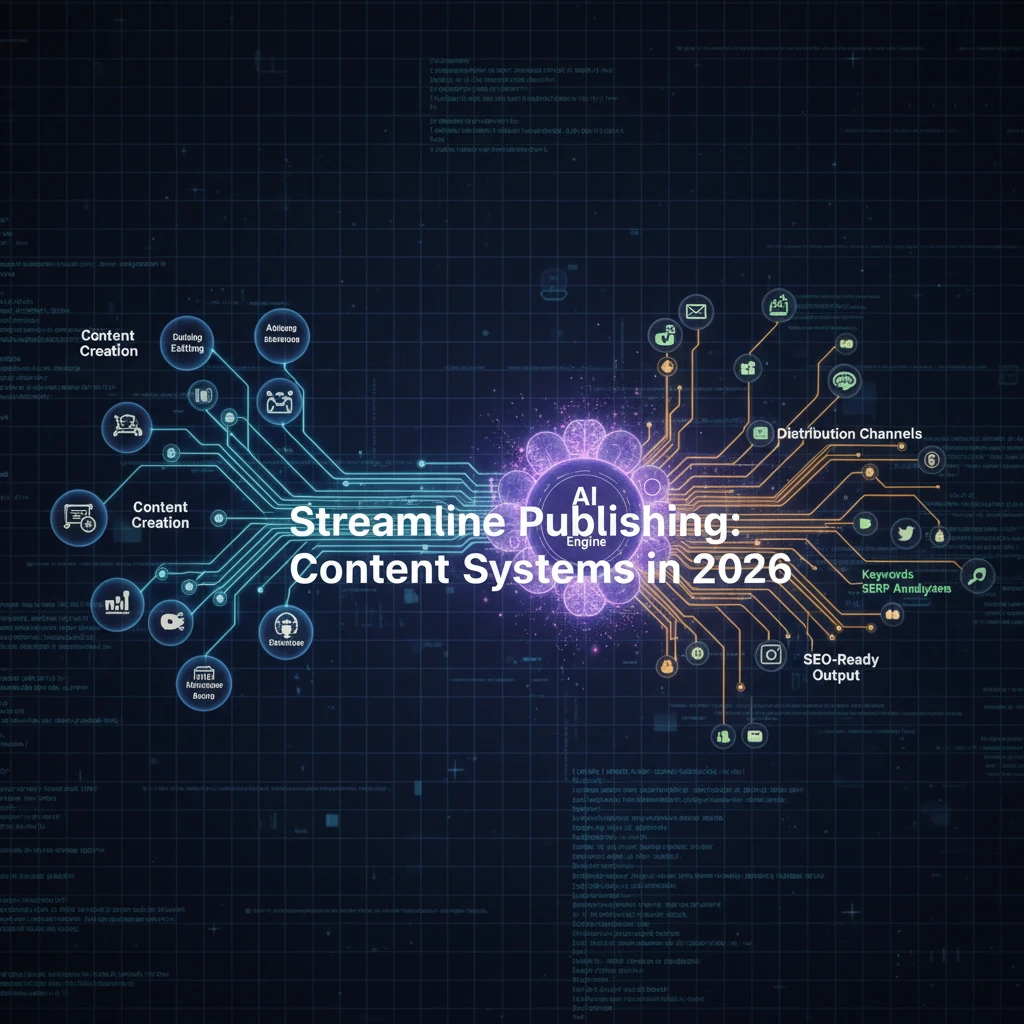
A modern content system must be built on principles of **scalability, adaptability, and intelligence**. It’s not just about the tools, but the entire ecosystem that supports content creation and dissemination. Key needs include robust **research capabilities** that can uncover trending topics and audience pain points rapidly; **efficient writing and editing processes** that maintain high quality while accelerating production; **sophisticated SEO optimization features** that adapt to evolving search engine best practices; and **seamless publishing and distribution mechanisms**. Furthermore, the system should facilitate **performance tracking and analytics**, providing actionable insights for continuous improvement. This holistic approach ensures that content efforts are not siloed but are integrated into a cohesive strategy designed to achieve specific business objectives. Think of it as an industrial-strength engine for content, rather than a series of manual levers. Understanding these foundational needs is the first step toward designing or selecting a system that can truly streamline your publishing process.
Beyond Spreadsheets: Architecting a Scalable Content Infrastructure
Mapping Your Content Journey: From Idea to Impact
A truly scalable content infrastructure begins with a meticulous mapping of the entire content journey. This involves visualizing every stage, from the initial spark of an idea to the ultimate realization of business impact. Start by defining **clear content objectives** that align with overarching business goals—are you aiming to drive traffic, generate leads, build brand authority, or support customer education? Next, map out the **ideation and research phases**: how will you identify high-potential topics? This should include competitive analysis and audience sentiment tracking. Then, detail the **creation workflow**: outlining roles, responsibilities, and quality assurance checkpoints for research, writing, editing, and media enrichment. Crucially, the journey must include **optimization steps**, encompassing SEO, readability, and user experience enhancements. Finally, map the **distribution and promotion channels** and, most importantly, the **measurement and analysis framework**. This comprehensive view, often documented in a visual flow or a detailed process document, is essential for identifying bottlenecks and opportunities for automation and efficiency. Consider this your blueprint for a high-performance content engine.
Choosing the Right Tools for Research, Writing, and Optimization
Selecting the right technology stack is paramount for building a robust content infrastructure. For **research**, look beyond basic keyword tools to platforms that offer in-depth competitor analysis and audience intent insights. Tools that can surface trending topics and identify content gaps are invaluable. For **writing**, while human creativity remains central, AI-assisted writing tools can significantly speed up the drafting process, assist with overcoming writer’s block, and ensure adherence to brand voice and style guidelines. When it comes to **optimization**, an integrated suite of tools is ideal. This should include advanced SEO platforms for on-page and technical analysis, readability checkers, and tools that can suggest content enhancements based on performance data. The goal is to create a synergistic environment where each tool complements the others, reducing friction and maximizing output quality and efficiency. A poorly chosen toolset can create more problems than it solves, so rigorous evaluation is key.

Integrating AI for Efficiency Without Sacrificing Quality
The integration of Artificial Intelligence (AI) into content systems is not about replacing human expertise but augmenting it to achieve unprecedented levels of efficiency and scale. The key lies in identifying tasks where AI excels, such as **data analysis, pattern recognition, and repetitive execution**, and leveraging it to free up human creators for more strategic and creative work. For instance, AI can analyze vast datasets to identify emerging trends, predict audience interests, or even suggest optimal content formats for specific topics. In the writing process, AI can generate outlines, draft initial sections, or refine existing copy for clarity and conciseness. For optimization, AI can perform continuous SEO checks, suggest relevant internal and external links, and even predict how changes might impact search rankings. The critical factor for success is to ensure that AI operates as an intelligent assistant, providing data-driven recommendations and handling routine tasks, while human oversight remains in place for strategic direction, nuanced editing, and maintaining brand integrity. This collaborative approach ensures that efficiency gains do not come at the expense of the deep quality and authenticity that audiences value. Explore how AI can enhance your workflows in areas like AI for Content Systems: Beyond Basic Automation.
AI’s Role in Automating Core Content Tasks
Leveraging AI for Topic Generation and Audience Research
AI has revolutionized the initial stages of content creation, transforming how businesses identify relevant topics and understand their target audiences. Instead of relying on guesswork or limited keyword research, AI-powered platforms can analyze vast amounts of data from search queries, social media trends, forum discussions, and competitor content. This allows for the **discovery of untapped niche topics** and the identification of specific pain points and questions that your audience is actively seeking answers to. AI algorithms can also segment audiences based on their behaviors, demographics, and interests, providing insights into their preferences and the types of content they are most likely to engage with. This data-driven approach ensures that your content strategy is not only relevant but also highly targeted, maximizing its potential impact. For example, an AI might identify a growing interest in “sustainable packaging solutions for e-commerce” within a specific industry, prompting the creation of a series of articles addressing this burgeoning demand, thereby positioning the business as a thought leader. This proactive approach to topic generation can significantly boost organic traffic and engagement.
AI-Assisted Writing: Enhancing Human Creativity, Not Replacing It
The most effective use of AI in writing is as a powerful co-pilot, augmenting human creativity and efficiency rather than seeking to replace it. AI tools can handle the more laborious aspects of writing, such as **generating initial drafts from outlines, expanding on bullet points, or rephrasing sentences for clarity and conciseness**. They can also assist with ensuring consistency in tone, style, and terminology across large volumes of content. For instance, an AI can quickly draft introductory paragraphs based on provided keywords and a brief topic description, allowing the human writer to focus on developing deeper insights, crafting compelling narratives, and adding unique perspectives. Furthermore, AI can perform real-time grammar and style checks, suggest vocabulary improvements, and even help adapt content for different platforms or audiences. This collaborative approach accelerates the writing process significantly, enabling content teams to produce higher volumes of quality content without compromising on originality or strategic depth. The human element remains crucial for nuanced storytelling, emotional resonance, and the strategic oversight that ensures content truly connects with readers.
Automated SEO Optimization: On-Page and Technical Checks
Ensuring content is discoverable by search engines is a critical component of any successful publishing strategy, and AI excels at automating many of the complex tasks involved. AI-powered tools can perform **comprehensive on-page SEO analysis**, evaluating factors such as keyword density, header tag usage, meta description effectiveness, and internal linking opportunities in real-time. They can also identify areas where content may be under-optimized for specific search intents. Beyond on-page elements, AI can assist with **technical SEO checks**, identifying issues like broken links, slow loading times, or improper schema markup that can negatively impact search rankings. The advantage of automation here is its ability to perform these checks consistently and at scale, often identifying minor issues before they become major problems. For example, an AI might flag a page where a target keyword is present but not sufficiently integrated into the body copy or suggest adding a related keyword phrase that has emerging search volume. This continuous, automated optimization ensures that content remains aligned with search engine best practices, maximizing its potential to rank well and attract organic traffic.
Streamlining Media Enrichment: Images, Videos, and Infographics
Beyond textual content, AI is increasingly valuable in enriching articles with compelling visual elements. This involves automating tasks related to **image selection, optimization, and even generation**, as well as assisting with video and infographic creation. AI can analyze the context of an article and suggest relevant stock imagery, or even generate unique visuals based on textual descriptions, saving significant time in the sourcing and design processes. Furthermore, AI can optimize images for web performance by compressing them without significant loss of quality, ensuring faster page load times, which is crucial for SEO and user experience. For video content, AI can automate transcription, generate subtitles, and even create highlight reels. Similarly, for infographics, AI can help in data visualization and layout suggestions. For instance, an AI might suggest a chart to visually represent statistics mentioned in an article or automatically crop and resize an image to fit different display formats. This automation not only speeds up the production cycle but also ensures that visual content is optimized for both engagement and technical performance.
Ensuring Content Freshness and Diversity with Intelligent Rotation
The Pitfalls of Content Monotony: Why Repetition Kills Engagement
Content monotony is a silent killer of audience engagement and search engine performance. When a website consistently publishes content on the same narrow set of topics, or worse, reiterates the same points repeatedly without offering new insights, several negative consequences emerge. Audiences begin to perceive the brand as unoriginal and lacking in diverse expertise, leading to **decreased readership and loyalty**. Search engines, which prioritize fresh and comprehensive content, may also penalize sites that appear stagnant or overly repetitive. This can manifest as **stagnant or declining organic rankings**, as algorithms favor more dynamic and varied content offerings. Furthermore, a lack of diversity limits a brand’s ability to attract new audience segments or address evolving market needs, ultimately hindering growth potential. Over-reliance on a few core themes can also lead to “content fatigue” among your internal teams, impacting their creativity and motivation. Embracing topic rotation and diversity is therefore not just about variety, but about maintaining relevance, authority, and competitive edge.
Strategies for Topic Rotation: Staying Ahead of Trends and Competitors
Effective topic rotation is a strategic imperative in today’s fast-paced digital environment. It involves deliberately cycling through different themes and sub-topics within your niche to ensure a breadth of coverage and appeal to a wider audience. A key strategy is to **develop a content matrix** that maps core subject areas against emerging trends, audience segments, and competitor activities. For example, if your niche is SaaS growth, you might rotate between deep dives into specific marketing channels (e.g., email automation, paid social), analyses of emerging technologies (e.g., generative AI in marketing), and **comparative content that highlights your platform’s advantages** over competitors. Regularly conducting Competitor Analysis: AI for Strategic Content Gaps can reveal underserved areas or unique angles that can inform your rotation. Leveraging AI to monitor social listening data and industry news can provide real-time signals for topic injection. The goal is to create a content calendar that feels dynamic and responsive, consistently offering something new and valuable without neglecting core evergreen topics.
Maintaining a Diverse Content Calendar for Broad Audience Reach
A diverse content calendar is fundamental to reaching and engaging a broad audience spectrum. It moves beyond simply covering a topic to exploring its myriad facets and catering to different user intents. This means incorporating a mix of content types and angles: from **in-depth guides and tutorials** that cater to users seeking detailed knowledge, to **quick tips and actionable advice** for those looking for immediate solutions, and **opinion pieces or trend analyses** for thought leadership. Critically, it involves **rotating focus areas and formats**. For instance, one week might feature a deep dive into AI-powered lead generation workflows, while the next could focus on the technical aspects of website content optimization or explore specific use cases within different industries, like Unlock SaaS Growth: AI-Driven Content Strategy. Regularly updating your calendar with fresh perspectives ensures that your content remains relevant to both novice and expert users, as well as attracting individuals at various stages of the buyer’s journey. This systematic approach to diversity prevents audience fatigue and maximizes your brand’s ability to capture organic traffic from a wider array of search queries and interest areas, ultimately driving sustained growth.
Operationalizing Content Systems: From Planning to Publishing
Transitioning from manual content creation to an automated system requires a deliberate approach to workflow design. Standardizing processes ensures that regardless of who is involved or which AI tool is leveraged, the output maintains a consistent quality and adheres to brand guidelines. This involves meticulously mapping out every stage, from initial topic ideation and keyword research to content generation, AI-assisted editing, and final publication. Key considerations include defining clear roles for human editors and AI, establishing approval gates, and setting up automated quality checks. A well-defined workflow minimizes errors, reduces turnaround times, and guarantees that every piece of content aligns with your overarching marketing objectives. For instance, a common pitfall is failing to integrate SEO best practices early in the process, leading to content that requires significant rework. Instead, embedding keyword integration, meta description generation, and internal linking strategies directly into the workflow streamlines the entire publication cycle. This systematic approach is crucial for scaling content production effectively.
In an automated environment, delegation and collaboration evolve significantly. While AI handles the heavy lifting of drafting and optimization, human expertise remains indispensable for strategic direction, nuanced editing, and maintaining brand voice. Effective delegation means assigning specific oversight roles, such as AI prompt engineering, content fact-checking, and final editorial approval, to team members. Collaboration tools become critical for facilitating communication and feedback loops between human contributors and AI-generated drafts. This isn’t about replacing human effort but augmenting it. For example, a growth marketer might define the target audience and core keywords, the AI generates the initial draft, a subject matter expert reviews for accuracy and depth, and a final editor polishes for brand voice and grammar. This distributed model leverages the strengths of both humans and machines, creating a more efficient and robust content pipeline. Pitfalls include unclear responsibilities, leading to duplicated efforts or overlooked tasks, or an over-reliance on AI without adequate human validation, which can result in factual inaccuracies or off-brand messaging.
Setting up a seamless publishing pipeline involves integrating various tools and stages into a cohesive system. This might start with a content calendar that feeds directly into an AI writing platform, which then pushes drafts to a collaborative editing suite. From there, automated SEO checks and media enrichment processes can be triggered before final approval and scheduled publication. Consider the entire user journey of a piece of content, from its inception as an idea to its landing on your website. Each step should ideally be automated or require minimal manual intervention. For instance, integrating your AI writing platform with your CMS can automate the upload and formatting of content, saving significant time. A critical decision point is selecting tools that offer robust API integrations, allowing them to communicate effectively. A common mistake is using disparate tools that don’t connect, forcing manual data transfer and increasing the risk of errors. Prioritizing an end-to-end solution or a well-integrated stack ensures that the publishing process flows effortlessly from concept to live article.
Measuring Content System ROI: Beyond Traffic Metrics
Quantifying the return on investment (ROI) of your content systems extends far beyond simple traffic growth. While increased website visits are a valuable outcome, a truly effective content system demonstrably impacts business objectives. Key performance indicators (KPIs) for content automation success should reflect this broader impact. Instead of just tracking page views, focus on metrics that reveal how content contributes to lead generation, customer acquisition, and revenue. For example, tracking the conversion rate of content-specific landing pages or monitoring the number of qualified leads generated from gated content is far more insightful than raw visitor numbers alone. Another crucial KPI is the cost per lead or cost per acquisition, allowing you to directly compare the efficiency of automated content production against other marketing channels. Analyzing engagement metrics like time on page, bounce rate, and social shares provides qualitative data that, when combined with conversion data, paints a comprehensive picture of content effectiveness. Focusing solely on top-of-funnel metrics can obscure the real business value your content is delivering.
Linking content output directly to business objectives requires a strategic alignment of your content strategy with your sales and marketing goals. If your primary objective is lead generation, your content system should prioritize creating high-value assets like e-books, webinars, or templates that can be used as lead magnets. Implementing a robust lead magnet workflow that captures visitor information in exchange for valuable content is a direct way to achieve this. For businesses focused on SaaS growth, content should aim to educate potential customers about their problems and how your solution addresses them, leading to demo requests or trial sign-ups. Analyze which content pieces are most effective at driving these desired actions, not just attracting clicks. For example, if a specific blog post series consistently leads to a higher percentage of demo requests than others, it indicates that this content format and topic are resonating with your target audience’s buying journey. This requires setting up proper tracking mechanisms within your analytics platforms to attribute conversions back to specific content pieces or campaigns.
Analyzing content performance for continuous improvement is an iterative process that leverages data to refine your strategy. Regularly review your KPIs to identify what’s working and what’s not. This involves not just looking at aggregate data but drilling down into individual content pieces and campaigns. For instance, if you notice that content related to a specific competitor consistently underperforms in terms of engagement and conversion, it might be time to re-evaluate your competitor analysis strategy or the angle of your content. Utilize A/B testing on headlines, calls-to-action, and content formats to optimize for better results. Furthermore, leverage AI-powered analytics tools that can identify patterns and provide predictive insights into content performance. This data-driven approach ensures that your content system evolves, adapting to user behavior and market trends, ultimately maximizing its ROI. A common pitfall is failing to act on the data, leading to stagnation and missed opportunities for optimization.
The Human Element in AI-Powered Content Creation
Despite the remarkable advancements in AI, the human element remains indispensable in AI-powered content creation. Human oversight is crucial for ensuring accuracy, originality, nuance, and brand alignment. AI can generate drafts quickly and efficiently, but it often lacks the critical thinking, emotional intelligence, and deep understanding of context that human editors provide. This oversight extends to fact-checking complex topics, ensuring the tone of voice is appropriate for the target audience, and infusing the content with unique perspectives or creative flair that AI might miss. For example, an AI might produce technically correct information about a new scientific discovery, but a human editor can contextualize it within existing knowledge, highlight its potential implications, and frame it in an engaging narrative. This collaborative process, often referred to as “human-in-the-loop,” prevents AI-generated content from becoming generic or factually flawed. Neglecting this step can lead to reputational damage and a loss of audience trust, undermining the very goals content creation aims to achieve. A robust editorial process safeguards against these risks.
Developing effective prompts and guidelines for AI tools is paramount to guiding their output and ensuring it aligns with your strategic goals. This requires a deep understanding of both your subject matter and the capabilities and limitations of the AI. Prompts should be specific, clear, and provide sufficient context, including target audience, desired tone, key keywords, and any specific data points or arguments to be included. Guidelines should outline brand voice characteristics, stylistic preferences, ethical considerations, and forbidden topics or phrases. For instance, a prompt for a blog post about sustainable packaging might include instructing the AI to focus on a specific type of material, emphasize cost-effectiveness for small businesses, and avoid overly technical jargon. A key pitfall is using vague prompts, which results in generic or irrelevant content. By investing time in crafting detailed prompts and comprehensive guidelines, you empower the AI to produce content that is not only well-written but also strategically valuable and brand-consistent. This iterative refinement of prompts is a continuous process.
Cultivating a content culture that embraces automation involves fostering an environment where team members see AI not as a replacement but as a powerful assistant. This requires clear communication about the benefits of automation, such as freeing up time for more strategic and creative tasks, and providing adequate training on how to effectively use AI tools. Encourage experimentation and learning, and establish feedback mechanisms so the team can contribute to improving AI prompts and workflows. When individuals feel empowered and supported in adopting new technologies, resistance decreases, and adoption rates increase. For example, holding workshops on prompt engineering or showcasing successful case studies where AI has augmented human creativity can shift perspectives. A successful content culture thrives on collaboration and continuous learning, ensuring that the entire team is aligned with the vision of leveraging technology to enhance content production and achieve business objectives more efficiently. This also involves acknowledging and celebrating the unique contributions humans bring to the creative process.
Future-Proofing Your Content Strategy with Adaptable Systems
The digital landscape is in constant flux, with algorithms evolving and AI capabilities rapidly advancing. Future-proofing your content strategy means building systems that are resilient and adaptable to these changes. Anticipating algorithm shifts and AI advancements requires a commitment to continuous learning and monitoring industry trends. This involves staying informed about updates from search engines, understanding the trajectory of AI development in content generation and analysis, and proactively assessing how these changes might impact your content’s visibility and effectiveness. For example, if search engines begin to prioritize more conversational or user-generated content formats, your system should be able to pivot to incorporate these elements. This proactive approach avoids costly overhauls later. A critical decision point is investing in platforms and tools that are known for their adaptability and regular updates, rather than those that are static. By maintaining flexibility, you ensure your content remains relevant and discoverable, even as the digital environment transforms. Understanding the nuances of how AI interprets and ranks content is key to long-term success.
Building flexibility into your content infrastructure is fundamental to long-term success. This means choosing technologies and designing workflows that can be easily modified or expanded to accommodate new tools, strategies, or content formats. Avoid rigid, siloed systems that are difficult to integrate with other solutions. Instead, opt for modular architectures and platforms that offer robust APIs and integrations. For instance, if your current AI writing tool has limitations in generating video scripts, a flexible infrastructure would allow you to easily integrate a specialized AI tool for that purpose without disrupting your entire publishing process. Similarly, designing your content management system (CMS) with a focus on structured data and flexible templating enables easier adaptation to new SEO requirements or content presentation styles. A common pitfall is investing heavily in proprietary, closed systems that limit your ability to adapt or innovate. Prioritizing interoperability and scalability ensures your infrastructure can evolve alongside your business needs and the digital landscape. This strategic planning is vital for sustained growth.
Staying agile in the face of evolving search and user behavior is paramount for maintaining a competitive edge. This requires establishing processes for ongoing monitoring, analysis, and rapid iteration. Regularly analyze user behavior data, such as search queries, engagement patterns, and conversion paths, to understand how your audience interacts with your content. Equally important is monitoring changes in search engine algorithms and user expectations. For example, if you observe a decline in organic traffic for a particular keyword cluster, it’s crucial to quickly investigate whether this is due to an algorithm update, increased competition, or a shift in user intent. Your content system should facilitate rapid content adjustments, topic diversification, or even the creation of entirely new content formats in response to these insights. This agile approach, similar to how businesses adapt their content strategy with AI automation, ensures that you are always meeting your audience where they are. The ability to quickly pivot your content production based on real-time data is a hallmark of a truly future-proof strategy.